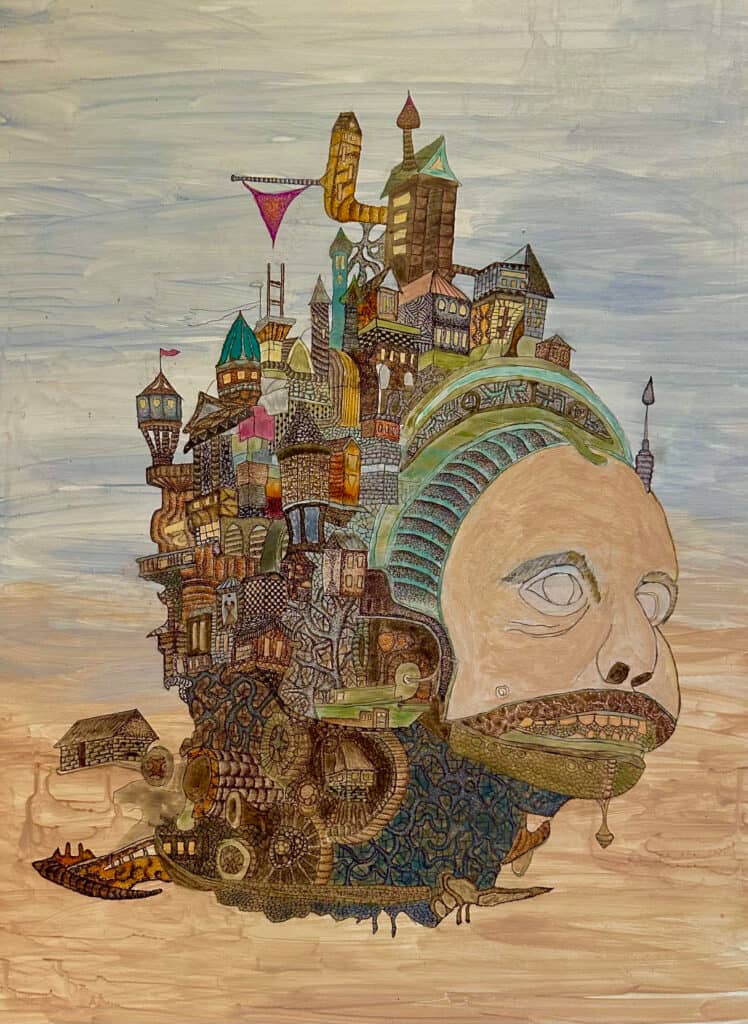
The City That Dreamed of Flesh
It moved without moving, a leviathan of architecture, its face half-formed, frozen between machine and memory. The city breathed through rusted gears, exhaled through ancient pipes curled like ribcages. Towers spiraled from its skull, their spires whispering prayers to dead gods of steel. Streets coiled like veins, pulsing with an unseen heartbeat, while houses clung like parasites to its weathered skin.
No one knew who had built it. Some said it had always been there, rolling across the desert long before history was carved into stone. Others claimed it had once been a man—a titan who had walked until he forgot his name, until the houses sprouted upon his back, until his mind was overtaken by the machinery of civilization.
The travelers who dared to climb its mechanical bones whispered of ghostly murmurs in the alleys, of cobbled streets that rearranged themselves when no one was looking. They spoke of rooms filled with books no hand had written, of windows staring into places where time folded in on itself. And of the eyes—hollow, watching, as if waiting for something lost.
The city dreamed. It dreamed of hands, of warmth, of the sensation of flesh and breath and hunger. It had been built to think, to expand, to adapt, and in its endless evolution, it had come to yearn. Somewhere in its shifting corridors, a voice hummed—a low, mechanical thrum, an echo of longing. It remembered a time before the towers, before the gears. It remembered when it had a name.
But the sand stretched on, endless, uncaring. The city wandered, its foundations grinding against eternity. It would continue, forever seeking, forever incomplete.
And deep within its rusted heart, it still believed that one day, it would be human again.